
What Is Tire Aspect Ratio?
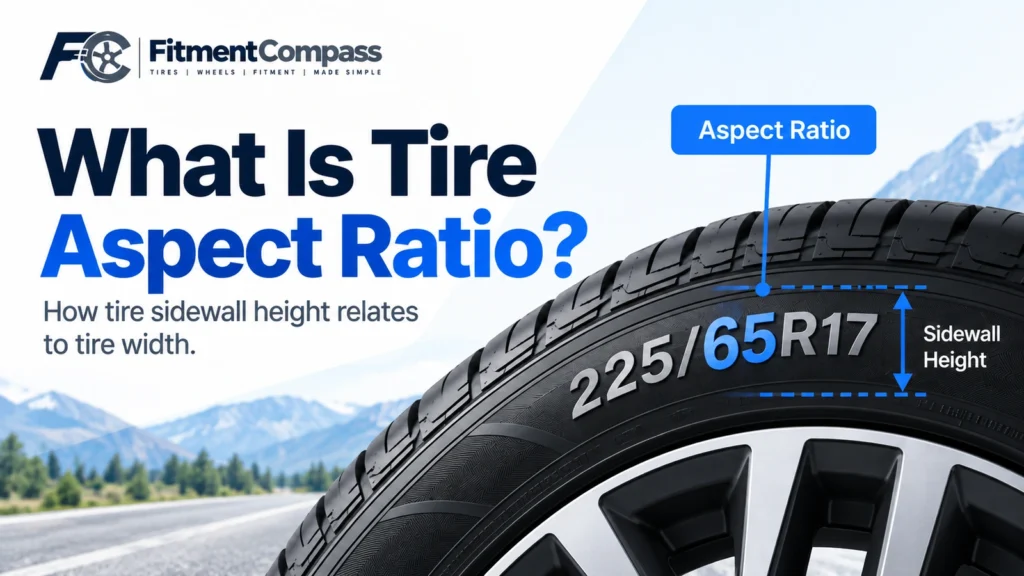
Tire aspect ratio is the sidewall height of a tire expressed as a percentage of its section width. In a tire size such as 225/65R17, the number 65 is the aspect ratio. It means the nominal sidewall height is 65% of the tire’s 225 mm section width.
The aspect ratio is not a sidewall measurement by itself. You need both the tire width and the aspect-ratio percentage to calculate the nominal sidewall height.
This guide explains where to find the aspect ratio, how to calculate it, how it changes overall tire diameter, and why two tires with the same aspect ratio can still have very different sidewall heights.
What Does Tire Aspect Ratio Mean?
The aspect ratio describes the relationship between a tire’s nominal section width and its sidewall height.
The basic relationship is:
Aspect ratio = Sidewall height ÷ Section width × 100
On most metric tire sizes, the aspect ratio appears immediately after the slash.
| Example | Meaning |
|---|---|
| 225/65R17 | 225 mm nominal section width |
| 225/65R17 | Sidewall height is 65% of section width |
| 225/65R17 | Radial construction |
| 225/65R17 | Designed for a 17-inch wheel |
So in 225/65R17, the number 65 does not mean 65 millimeters. It means the sidewall height is calculated as 65% of 225 mm.
Where Is the Aspect Ratio on a Tire?
Look for the tire-size code molded into the sidewall. A common format looks like this:
225/65R17
- 225 = nominal section width in millimeters
- 65 = aspect ratio
- R = radial construction
- 17 = wheel diameter in inches
The second number is therefore the one you are looking for when identifying tire aspect ratio.
How to Calculate Tire Sidewall Height From Aspect Ratio
You can calculate nominal sidewall height with a simple formula:
Sidewall height (mm) = Tire width (mm) × Aspect ratio ÷ 100
Example: 225/65R17
For a 225/65R17 tire:
- Section width = 225 mm
- Aspect ratio = 65%
- 225 × 0.65 = 146.25 mm
- 146.25 ÷ 25.4 = approximately 5.76 inches
The calculated nominal sidewall height is therefore approximately 146.25 mm, or 5.76 inches.
Remember that this is a calculated dimension based on the tire-size designation. Actual measured dimensions can vary somewhat by tire manufacturer, model, approved rim width, inflation and load.
How Aspect Ratio Affects Overall Tire Diameter
The aspect ratio contributes directly to overall tire diameter because the tire has a sidewall above and below the wheel.
For a metric tire, a useful calculated-diameter formula is:
Overall diameter (mm) = Wheel diameter (in) × 25.4 + 2 × Sidewall height (mm)
Using the 225/65R17 example:
- Wheel diameter: 17 × 25.4 = 431.8 mm
- Sidewall height: 146.25 mm
- Two sidewalls: 146.25 × 2 = 292.5 mm
- Calculated overall diameter: 431.8 + 292.5 = 724.3 mm
- 724.3 ÷ 25.4 = approximately 28.52 inches
This is why changing the aspect ratio while keeping tire width and wheel diameter unchanged changes the tire’s overall diameter.
Lower vs Higher Tire Aspect Ratio
When tire width stays the same, a lower aspect-ratio number produces a shorter sidewall, while a higher number produces a taller sidewall.
| Tire Size | Calculated Sidewall | Calculated Diameter |
|---|---|---|
| 225/45R17 | 101.25 mm / 3.99 in | 24.97 in |
| 225/55R17 | 123.75 mm / 4.87 in | 26.74 in |
| 225/65R17 | 146.25 mm / 5.76 in | 28.52 in |
In this example the tire width and wheel diameter remain the same, so the change in aspect ratio directly changes sidewall height and overall diameter.
In general, lower-profile tires have less sidewall between the wheel and road, while higher-profile tires have more. Tire construction, vehicle suspension, inflation pressure and other factors also affect ride and handling, so aspect ratio should not be considered by itself when evaluating how a tire will behave.
The Same Aspect Ratio Does Not Mean the Same Sidewall Height
This is one of the most important points to understand about tire aspect ratio.
Because aspect ratio is a percentage of tire width, two tires with the same ratio can have different sidewall heights.
| Tire Width | Aspect Ratio | Calculated Sidewall Height |
|---|---|---|
| 225 mm | 65% | 146.25 mm |
| 245 mm | 65% | 159.25 mm |
| 285 mm | 65% | 185.25 mm |
All three examples are 65-series tires, but the wider tire has the taller calculated sidewall because 65% is being applied to a larger section width.
Real Tire-Size Examples
The relationship becomes easier to see using tire sizes already documented in the FitmentCompass tire-size database.
275/70R18
A 275/70R18 tire has a 275 mm nominal width and a 70% aspect ratio.
- Calculated sidewall height: 7.58 in
- Calculated overall diameter: 33.16 in
285/75R16
A 285/75R16 tire has a 285 mm nominal width and a 75% aspect ratio.
- Calculated sidewall height: 8.42 in
- Calculated overall diameter: 32.83 in
The 285/75R16 has the higher aspect ratio and taller sidewall, but the 275/70R18 has a slightly larger calculated overall diameter because it uses the larger 18-inch wheel.
What Happens If You Change Only the Aspect Ratio?
If tire width and wheel diameter remain unchanged, increasing the aspect ratio increases sidewall height and overall tire diameter. Decreasing it does the opposite.
A change in overall diameter can also change:
- Tire circumference
- Revolutions per mile
- Speedometer and odometer relationship
- Effective gearing
- Ride height
- Wheel-well and suspension clearance
That is why an alternative tire size should be compared as a complete size rather than choosing a different aspect ratio by itself.
Use the Tire Size Comparison Calculator to compare two complete sizes before considering a change.
Aspect Ratio vs Tire Width
Tire width and aspect ratio describe different things, but they work together.
- Tire width is the nominal section width expressed in millimeters.
- Aspect ratio is the sidewall height expressed as a percentage of that width.
For example, the 75 in 285/75R16 cannot be converted into a sidewall height unless the 285 mm width is also known.
Aspect Ratio vs Wheel Diameter
Aspect ratio describes the tire sidewall, while wheel diameter describes the diameter of the wheel the tire is designed to mount on.
In 225/65R17:
- 65 is the aspect ratio.
- 17 is the wheel diameter in inches.
Changing wheel diameter while trying to maintain a similar overall tire diameter usually requires changes to other parts of the tire size, including sidewall height. Always compare the complete proposed tire size against the vehicle’s approved specifications.
How to Compare Aspect Ratios Correctly
Do not compare aspect-ratio numbers alone. Instead, compare the complete tire dimensions.
Check:
- Section width
- Aspect ratio
- Sidewall height
- Wheel diameter
- Overall tire diameter
- Circumference
- Revolutions per mile
- Load index and load requirements
- Speed rating
- Vehicle and wheel clearance
You can use the Tire Size Calculator to calculate dimensions for one size, or the Tire Size Converter when working between tire-size formats.
For individual calculated dimensions, browse the FitmentCompass Tire Sizes database.
Does Tire Aspect Ratio Tell You Whether a Tire Fits?
No. Aspect ratio is only one part of tire fitment.
A tire may have a suitable-looking aspect ratio but still be incorrect for a vehicle because of its overall diameter, width, wheel size, load rating, speed rating or available clearance.
For vehicle-specific research, use the Vehicle Tire & Wheel Fitment section and confirm the exact model year, trim and factory specifications before purchasing or installing tires.
Frequently Asked Questions
What does the aspect ratio on a tire mean?
It represents nominal sidewall height as a percentage of the tire’s section width. A 65 aspect ratio means the calculated sidewall height is 65% of the nominal section width.
What does 55 mean in a tire size such as 225/55R17?
The 55 is the aspect ratio. For a 225 mm-wide tire, the nominal sidewall height is 55% of 225 mm, or 123.75 mm.
Is tire aspect ratio measured in millimeters?
No. The aspect ratio is a percentage. The sidewall height calculated from it can then be expressed in millimeters or inches.
Does a higher aspect ratio mean a taller sidewall?
When tire width is the same, yes. A higher aspect ratio produces a taller calculated sidewall. If tire width is different, you must calculate the actual sidewall height before comparing the tires.
Can two tires have the same aspect ratio but different sidewall heights?
Yes. Because the ratio is based on tire width, a wider tire with the same aspect-ratio percentage will have a taller calculated sidewall.
Can I change from a 55 aspect ratio to a 60 aspect ratio?
Not based on the aspect-ratio number alone. If the width and wheel diameter remain the same, moving from 55 to 60 increases sidewall height and overall diameter. The complete alternative size must be checked against the vehicle’s specifications, load requirements and available clearance.
Does tire aspect ratio affect speedometer readings?
Aspect ratio can contribute to a speedometer difference when it changes the tire’s overall diameter. The speedometer relationship depends on the complete tire size and resulting circumference, not the aspect-ratio number by itself.
Technical References
The tire-size terminology and aspect-ratio definitions used in this guide were cross-checked against established tire-industry references. These sources explain tire sidewall markings, section width, aspect ratio and wheel-diameter terminology:
- Michelin: How to Read Tire Markings and Sidewall Codes — explains that the aspect-ratio number represents sidewall height as a percentage of tire width.
- Tire Rack: How Do I Read My Tire Size on My Sidewall? — explains section width, sidewall aspect ratio, construction and wheel diameter.
- Continental: Tire Markings — explains aspect ratio as tire section height relative to section width.
Fitment note: Calculated tire dimensions describe nominal geometry based on the tire-size code. Actual tire dimensions can vary by manufacturer, tire model, approved rim width, load and inflation. Aspect ratio alone cannot confirm vehicle compatibility. Always verify the complete tire size, load requirements, wheel specifications and vehicle manufacturer’s fitment information before purchasing or installing tires.


